The Significance of Nominal Relay Current
Understanding LED Inrush Current and Its Impact on KNX Switch Actuators

Outline:
- Introduction
- Briefly explain what inrush current is, particularly in LED lighting.
- Highlight the importance for KNX switch actuator performance and reliability.
- Section 1 – Fundamentals of LED Inrush Current
- What is inrush current? A sudden surge when input capacitors charge—potentially tens to hundreds of amperes in a few milliseconds.
- Why is it relevant in LED systems? Because many LED drivers behave like capacitive loads (“C-Load”), causing high peaks.
- Section 2 – KNX Switch Actuators and C-Load Handling
- Explain the difference between nominal (continuous) current rating of the relay (e.g. 16 A or 20 A) and its ability to handle short-time current peaks.
- Provide examples of typical KNX actuator inrush ratings: e.g., 600 A for 150 µs, 480 A for 230 µs, 300 A for 600 µs.
- Section 3 – Aggregated Inrush with Multiple LEDs
- Discuss the risk when multiple LEDs are connected to the same actuator.
- Show how inrush currents add up if switching synchronized; e.g., 10 LEDs with 50 A each might theoretically create a 500 A spike.
- Section 4 – Interpreting the Relay’s Amp Rating
- Clarify that the “Ampere” marking on the relay corresponds to continuous current, not inrush.
- Explain what specifications (e.g., peak inrush, C-Load μF rating) are critical for safe operation.
- Section 5 – Mitigation Strategies
- Soft-start circuits or NTCs to reduce inrush.
- Staggered switching for grouped LED circuits.
- Using actuators designed explicitly for C-Load and with robust inrush ratings.
- Conclusion
- Emphasize the importance of considering inrush current in system design.
- Encourage professionals to review both nominal and peak ratings for reliable KNX installations.
What is Inrush Current in LED Drivers?
When an LED lamp is powered on, the driver’s input capacitors charge almost instantly. This charging process draws a very high surge of current within microseconds—sometimes reaching up to 100 times the normal operating current.
This short-lived but intense spike is known as inrush current.
- For example, an LED lamp that normally consumes 0.5 A in steady state may draw 50 A or more for a fraction of a millisecond at startup.
- While this does not damage the LED itself, it stresses the relay contacts and switching devices controlling the load.
Why is Inrush Current a Problem for KNX Switch Actuators?
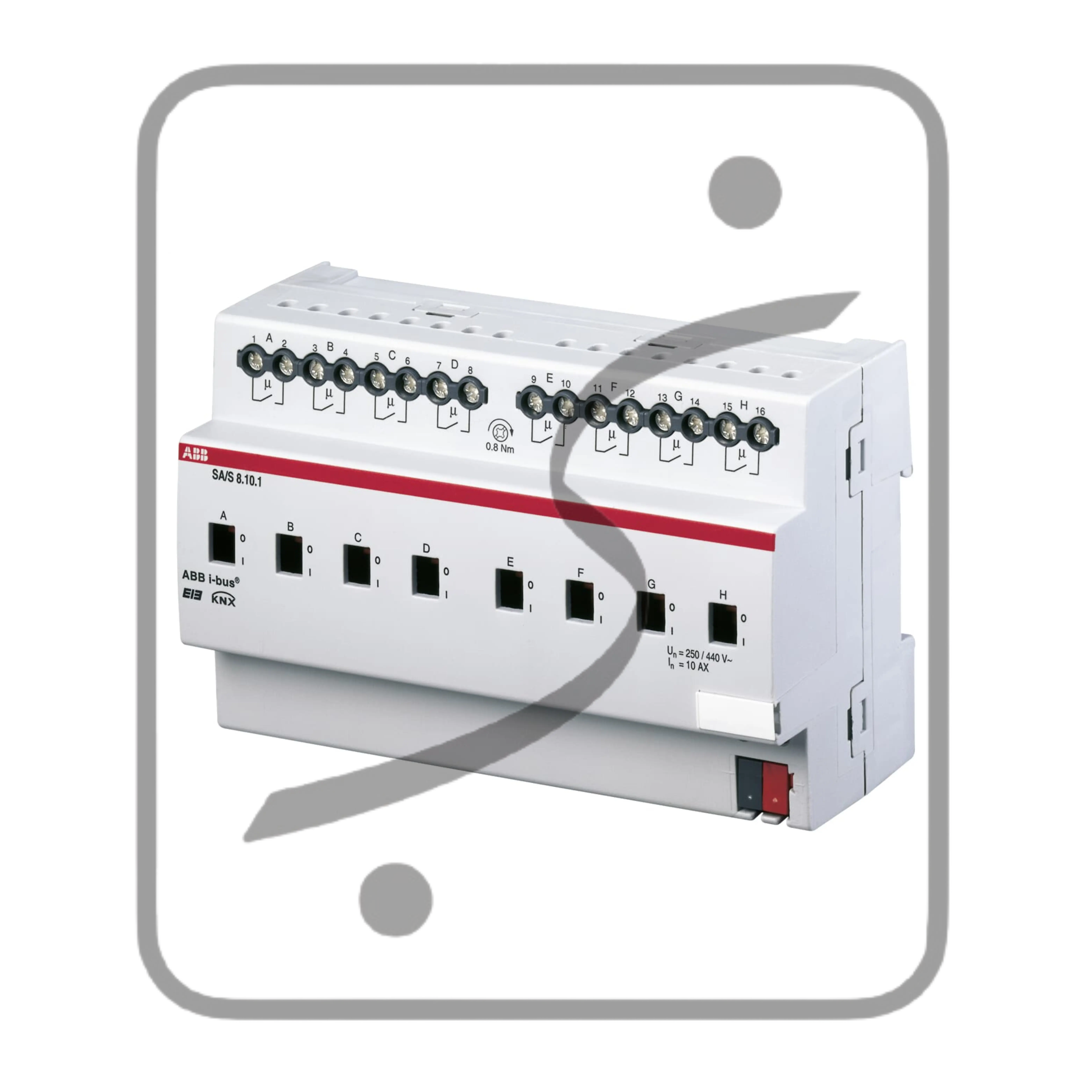
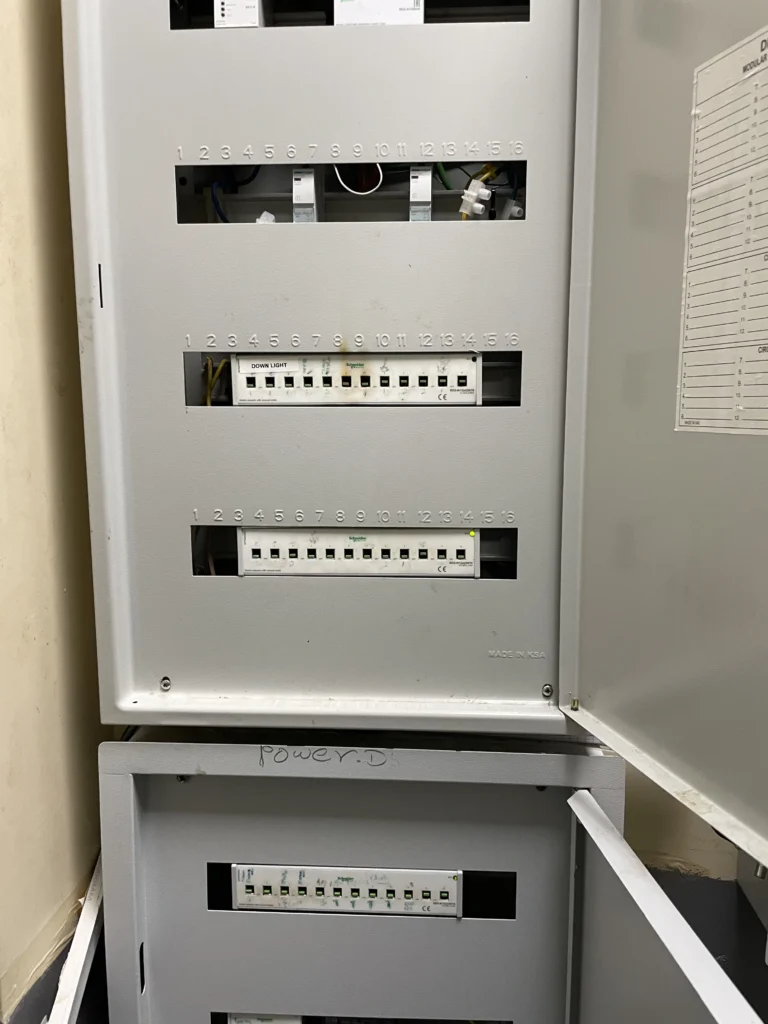
Most KNX switch actuators use relays designed for resistive loads such as incandescent lamps. These relays are rated by their continuous current capacity (e.g., 16 A or 20 A). However, the printed ampere value refers to the steady-state current, not the inrush peak.
- Standard relays may not survive repetitive inrush currents.
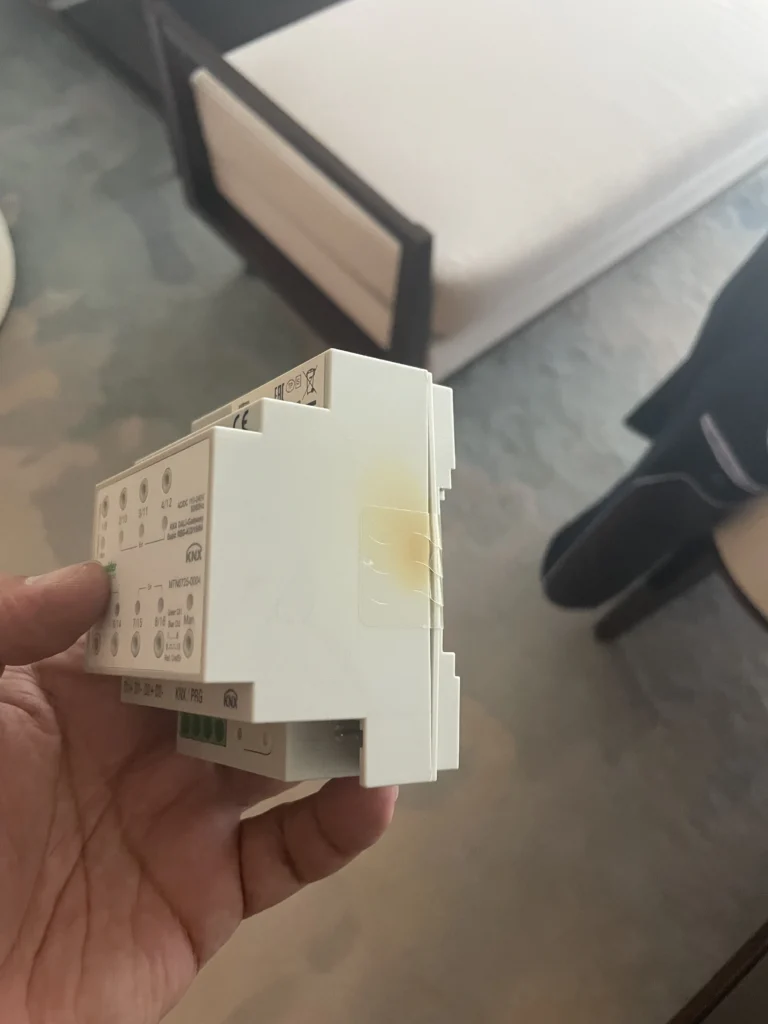
- Relay contacts can stick, weld, or degrade prematurely.
- Some manufacturers explicitly mention in their datasheets that actuators should be used with resistive loads only, discouraging capacitive loads such as LEDs.
This is why C-Load actuators were introduced in KNX systems, capable of handling capacitive loads with specified inrush current endurance.
Typical Inrush Current Ratings for KNX C-Load Actuators
High-quality KNX actuators specify tolerances such as:
- 600 A for 150 µs
- 480 A for 230 µs
- 300 A for 600 µs
These ratings are critical in determining whether an actuator can reliably switch multiple LED lamps on the same channel.
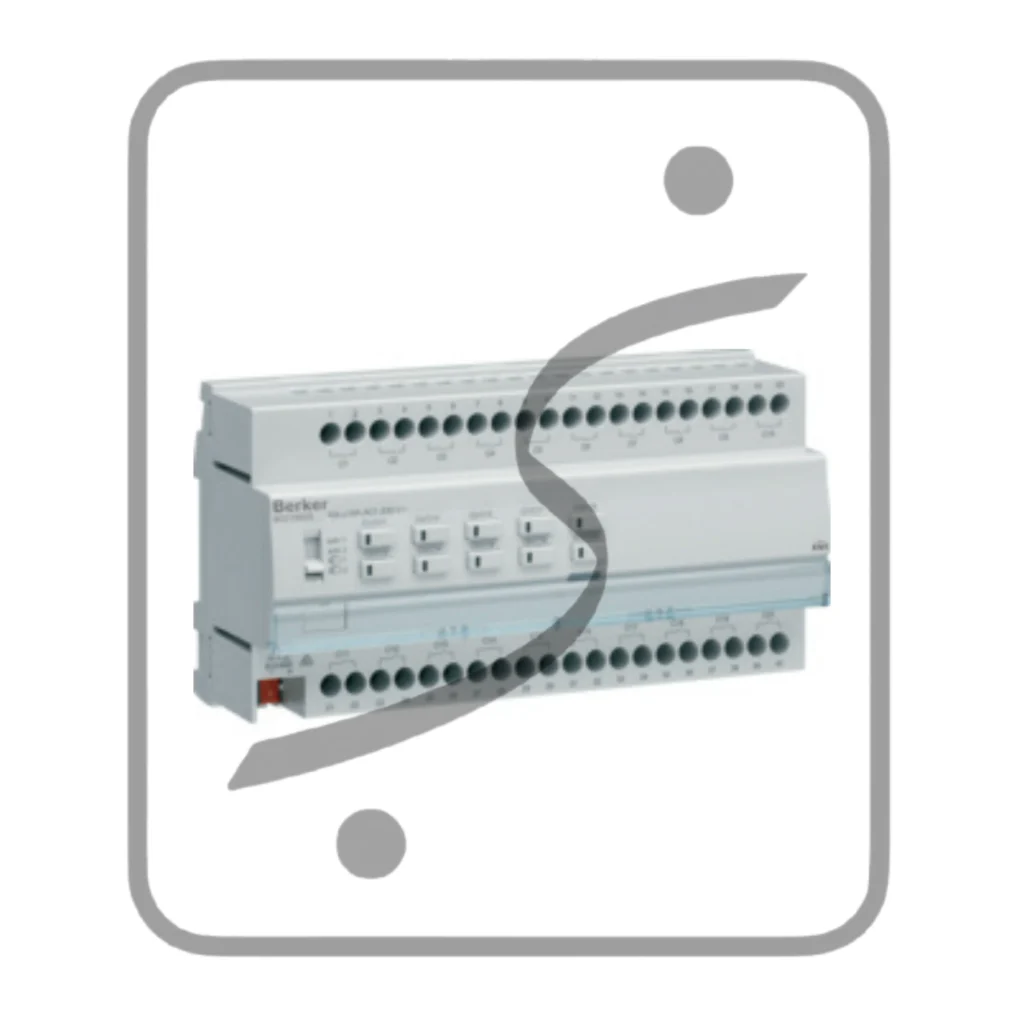
This is the catalogue of 80319005 Berker Switch Actuator with 16A and 20ch.
but max the LED 25*18W for each channel up to 450W.
however base on 220*16= 3520W.
now it’s clear LED is very different base on INRUSH CURENT to connect to our switch KNX actuator

Aggregation of Multiple LED Loads
When several LED lamps are connected in parallel and switched simultaneously:
- Each LED driver contributes its own inrush current.
- The combined inrush may exceed the actuator’s rated peak current.
- For instance, ten LED drivers with 50 A inrush each could result in a 500 A instantaneous load.
This cumulative effect is often overlooked, leading to nuisance tripping or even relay damage in KNX installations.
- How to Choose the Right Smart Home System in the UAE
- 🎵 Multi-Room Audio in Smart Home Automation – What It Is and Why It Matters
- Smart Home Automation Hack!
- Is Wireless KNX a Reliable Choice for Your Smart Villa in Dubai?
- Integration of Intercom and CCTV in KNX Projects
Mitigation Strategies
To ensure long-term reliability in KNX projects, professionals should consider:
- Choosing C-Load certified KNX actuators with high inrush tolerance.
- Distributing LED loads across multiple channels rather than concentrating them on a single relay.
- Using inrush current limiters (NTC thermistors or dedicated circuits) to soften the startup surge.
- Staggered switching (soft-start) to prevent all lamps from energizing at the exact same millisecond.
Pro tip – Dealing with very large LED loads (chandeliers, halls, auditoriums)
For circuits with very high combined inrush (e.g., big chandeliers or auditorium luminaires), use a two-stage switching topology instead of relying on a single relay:
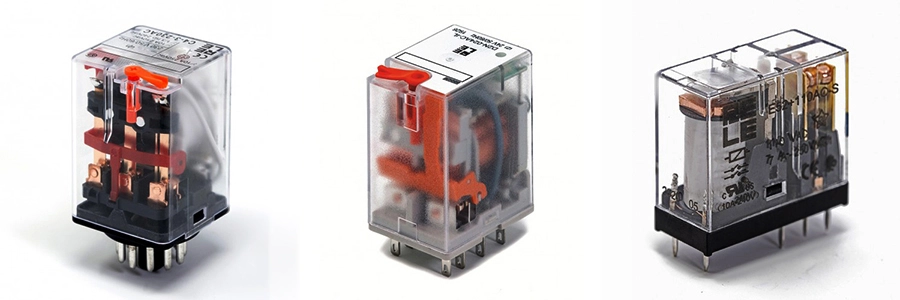
- Pre-charge path (auxiliary relay + series limiter)
- Use a small auxiliary (often called “glass/reed”) relay to connect a series limiter (NTC or fixed resistor) for ~100–300 ms.
- This gently pre-charges the LED drivers’ input capacitors, drastically cutting the inrush peak.
- Main power relay/contact
- After pre-charge, close a C-Load-rated relay or contactor (high inrush / high I²t) to bypass the limiter and carry the continuous current.
Alternative options
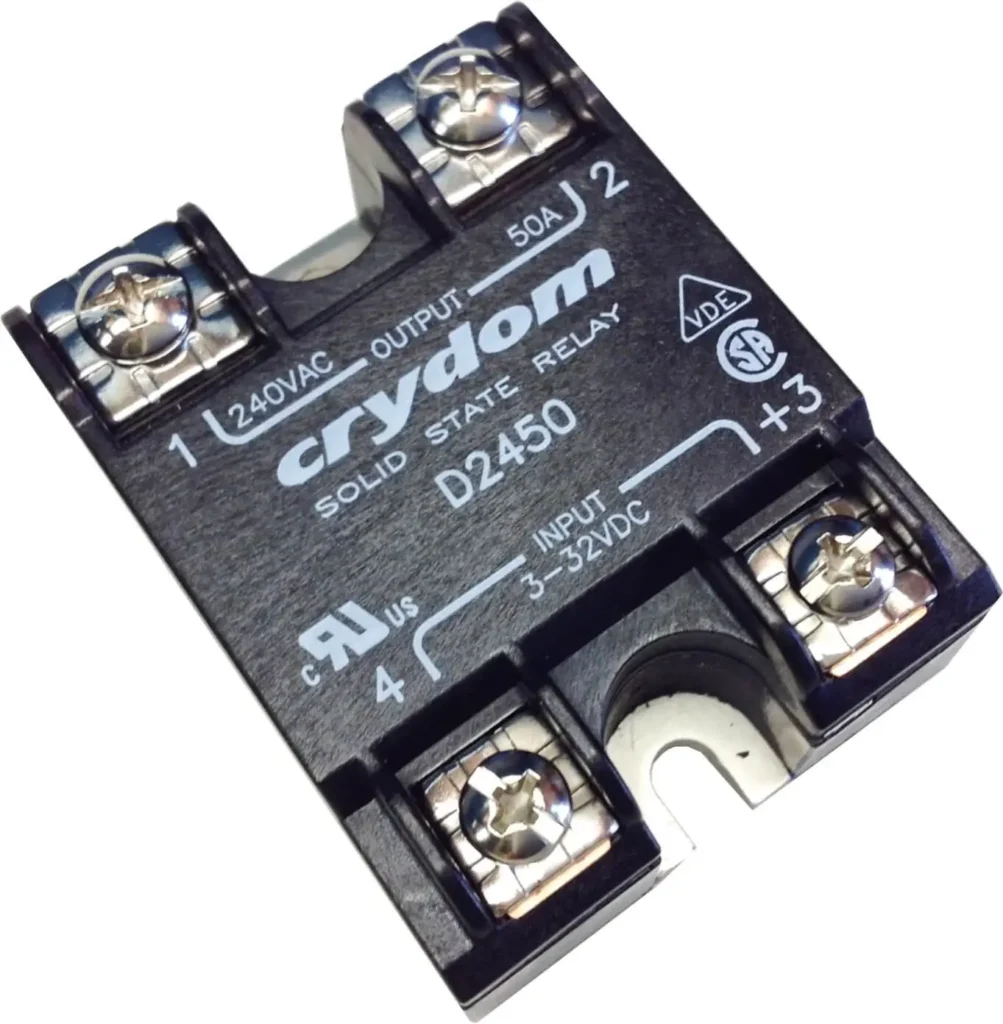
- Zero-cross SSR (solid-state relay) with a high surge/I²t rating to switch at the sine-wave zero crossing and minimize di/dt.
- LED drivers with built-in soft-start/inrush limiting (check datasheets).
- Staggered switching across multiple KNX channels to de-synchronize turn-on.
Protection & EMC hygiene
- Pair with an appropriate MCB curve (C/D) when permitted, sized for the expected inrush.
- Add RC snubbers and/or MOVs across contacts (per manufacturer guidance) to reduce contact stress and ringing.
Bottom line: a pre-charge + main relay (or a zero-cross SSR) prevents contact welding, nuisance tripping, and extends actuator life on very large LED groups.

Conclusion
While LEDs offer unmatched efficiency and performance, their inrush current behavior presents a real challenge in smart home projects. KNX switch actuators must be selected not only based on their nominal current rating but also on their ability to handle short-term inrush peaks.
Ignoring this factor can lead to premature failures, increased maintenance costs, and reduced system reliability. For professional KNX installations in Dubai and across the UAE, always choose actuators rated for capacitive loads and carefully evaluate the total LED inrush current in each circuit.
❓ Frequently Asked Questions (FAQ)
Yes, but you must consider the inrush current of LEDs. As a practical guideline, avoid exceeding 70 W per channel for a single LED load, and when connecting multiple LEDs in parallel, the total should not exceed 300 W.
No. LEDs have a high inrush current due to their driver capacitors. Always check the manufacturer’s datasheet and actuator limitations instead of using a 1:1 replacement rule.
For LED loads, the continuous current rating (10 A vs. 16 A) is less important than the inrush current endurance. Therefore, actuator type (C-Load or standard) matters more than the ampere rating.
Use auxiliary glass relays or pre-charge relays at the output. These can reduce inrush stress on the main relay contacts and significantly improve actuator lifetime.
Yes. KNX systems are widely used in Dubai villas and apartments to control LED lighting, HVAC, and shading. The key is to design with LED inrush current in mind for reliability.
Many LED drivers used in the UAE market have very high inrush currents. If standard actuators are used without C-Load capability or protection relays, contact welding or premature failure can occur.
Absolutely. With the right actuator and LED driver (DALI or 0–10V interfaces), KNX provides smooth LED dimming and scene control, widely applied in Dubai luxury homes.
For large decorative lighting common in villas and hotels, use C-Load actuators, or combine with pre-charge relays or zero-cross SSRs for better protection.
Where can I buy/ order online?