

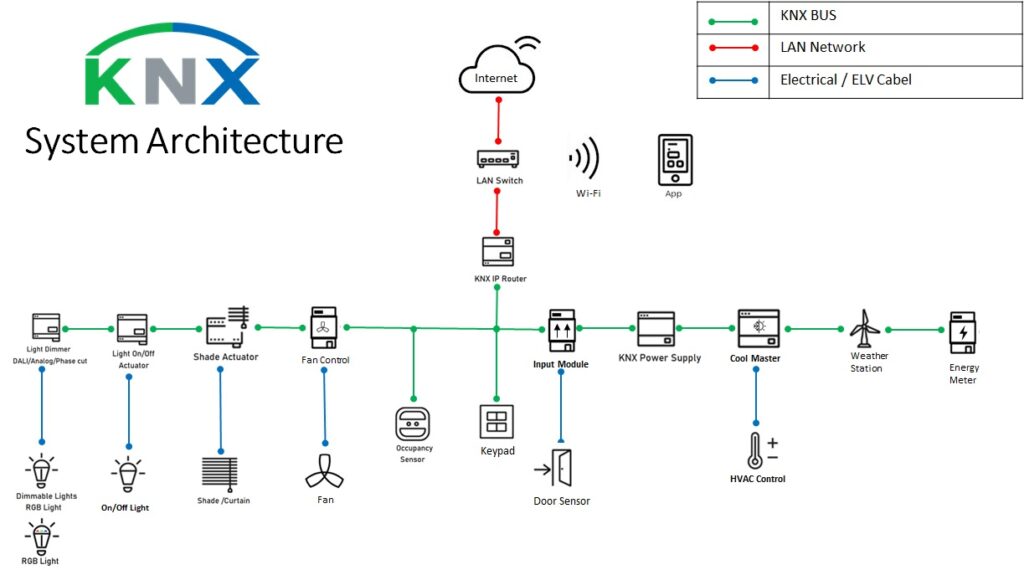
KNX Media can convert to other with coupler device or gateway to connect other protocol such as Dali, Ethernet and so on.
🟠 Introduction:
With years of experience in high-end KNX projects, we often get asked whether wireless KNX (KNX RF/BLE) is a viable alternative to wired solutions—especially in complex or luxurious installations like villas in Dubai. Let’s break down the truth about KNX wireless, the ongoing developments by the KNX Association, and our professional recommendations.
🔹 A Brief History of KNX RF
KNX RF was introduced several years ago, and while many manufacturers added it to their catalogs, it never became the standard. Why? Because even the KNX Association has always maintained that RF is not a backbone, but a fallback.
The idea was simple: If for some reason you couldn’t wire a certain section—maybe due to structural constraints or a late-stage project variation—KNX RF could fill in the gaps. It was never intended to replace the robustness of KNX TP1.
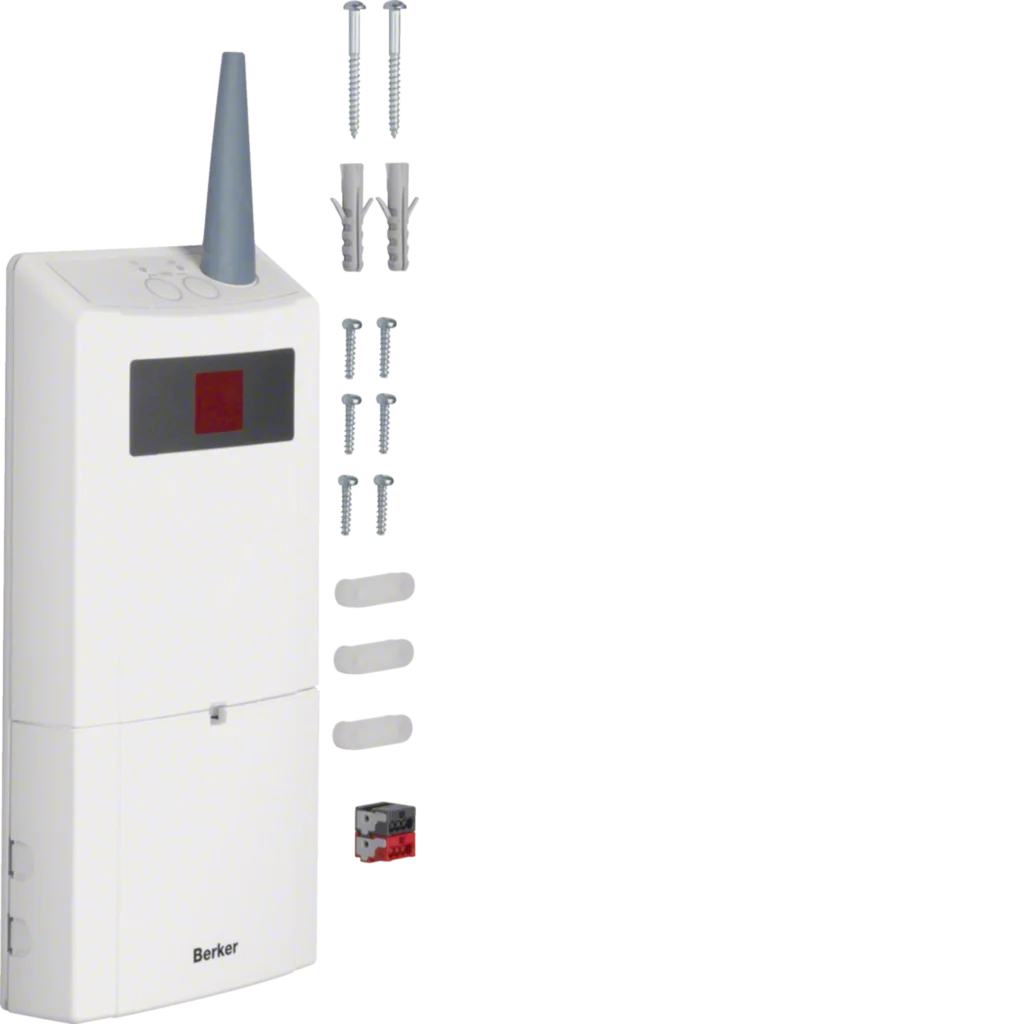
KNX RF Coupler: This is RF Berker for wireless Solution in KNX project
🔹 Why RF is Still a Limited Solution
Despite being available for over 7–8 years, only a few brands offer KNX RF devices—and even fewer offer a full range. Why? Because wired KNX offers clear benefits:
Long-term investment protection
Better stability
More variety in devices
Easier troubleshooting
🔹 Bluetooth 5 and the KNX BLE Movement
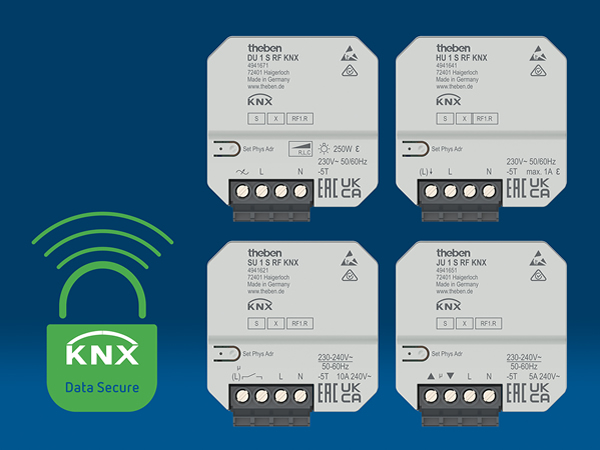
More recently, KNX has embraced Bluetooth Low Energy (BLE) as part of its wireless roadmap. Some manufacturers are already rolling out KNX BLE devices, and tools like ETS6 now allow partial or full planning for wireless zones. But here’s what’s interesting: KNX is using BLE not just for wireless communication, but also as a strategic IoT platform.
BLE provides secure, low-power, short-range communication between devices—making it suitable for scenarios like room-based automation, presence detection, and device pairing. It opens up new possibilities in the KNX ecosystem for local control and mobile integration.
However, even with these innovations, the verdict remains the same:
Wireless KNX is a support strategy—not your system’s backbone.

🔻 Our Final Recommendation
If you’re building a villa in Dubai, and you want a smart system that lasts for decades, don’t gamble with wireless—even if it’s KNX-based. Stick to the wired KNX TP1 solution. Use wireless (RF or BLE) only when absolutely necessary—and only as an extension, not the foundation.

KNX Maintenance & Upgrade Services in Dubai
- Nibras Smart Home Begins Development of Smart KNX Room Board
- Extending the Life of KNX Switch Actuators with External Relays
- Recommended Installation Heights for Smart Home Switches and Panels
- Verified vs. Non-Verified KNX Products
- KNX Achieves Record Presence at CEDIA Expo 2025 in U.S

A: Yes, you can. You’ll need an RF Coupler to bridge the TP1 (wired) and RF media layers. Reliable options are available from brands like Berker or Hager.
A: No comparison. Wireless KNX is significantly more expensive and has limited device variety. It should only be used when absolutely necessary.
A: I still recommend using a fully wired KNX backbone, and then relying on embedded solutions like INSPINIA for IoT or remote access needs.
A: Wireless is easier, but we’re not in this for convenience—we’re here for quality and stability, which is why KNX exists in the first place.
A: Use only wired KNX. As for brands, I’m not brand-loyal, but for power/distribution devices I recommend Hager or Schneider, and for field devices (keypads, thermostats) look into ABB, MM Electro, or Station KNX.