
Estimated reading time: 6 minutes
In the luxury villa market of Dubai, climate control is not just about comfort—it’s about efficiency, intelligence, and precision. With temperatures rising well above 40°C, integrating a smart cooling system is essential. That’s where KNX, the most trusted European automation protocol, comes into play.
Having worked on several residential and villa projects across the UAE, I can confidently say that KNX offers unmatched flexibility in integrating different cooling systems—regardless of the brand or technology used.
🧠 Why KNX for Cooling Control?
Whether your project includes a simple FCU setup or an advanced VRF system, KNX offers scalable solutions that are both brand-agnostic and reliable. The modular nature of the protocol allows you to:
- Use one common thermostat across all zones
- Maintain centralized or decentralized control
- Create scenes and automation for energy savings
- Avoid being locked into a single HVAC brand
Let’s explore how each cooling system integrates with KNX in the context of villas in Dubai.
🌀 1. Fan Coil Units (FCU): 2-Pipe and 4-Pipe Control
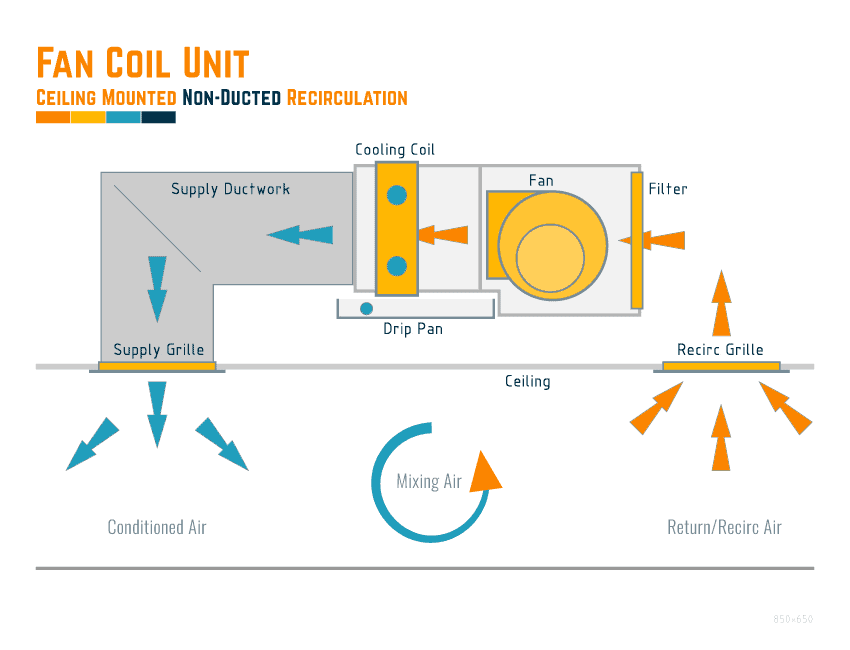
Fan Coil Units are commonly found in premium villa projects. KNX-compatible FCU controllers are available in both:
- 2-pipe: Cooling only
- 4-pipe: Cooling and heating (though heating is rarely used in UAE)
A typical FCU controller will manage:
- 3-speed fan control (Low / Medium / High)
- On/Off control for motorized valves
- Optional compressor control for packaged units
These controllers are connected to the KNX bus and can be operated manually or via pre-set scenes such as “Away Mode”, “Cooling Boost”, etc.
❄️ 2. AC, VRV, and VRF Systems: Brand-specific Gateways
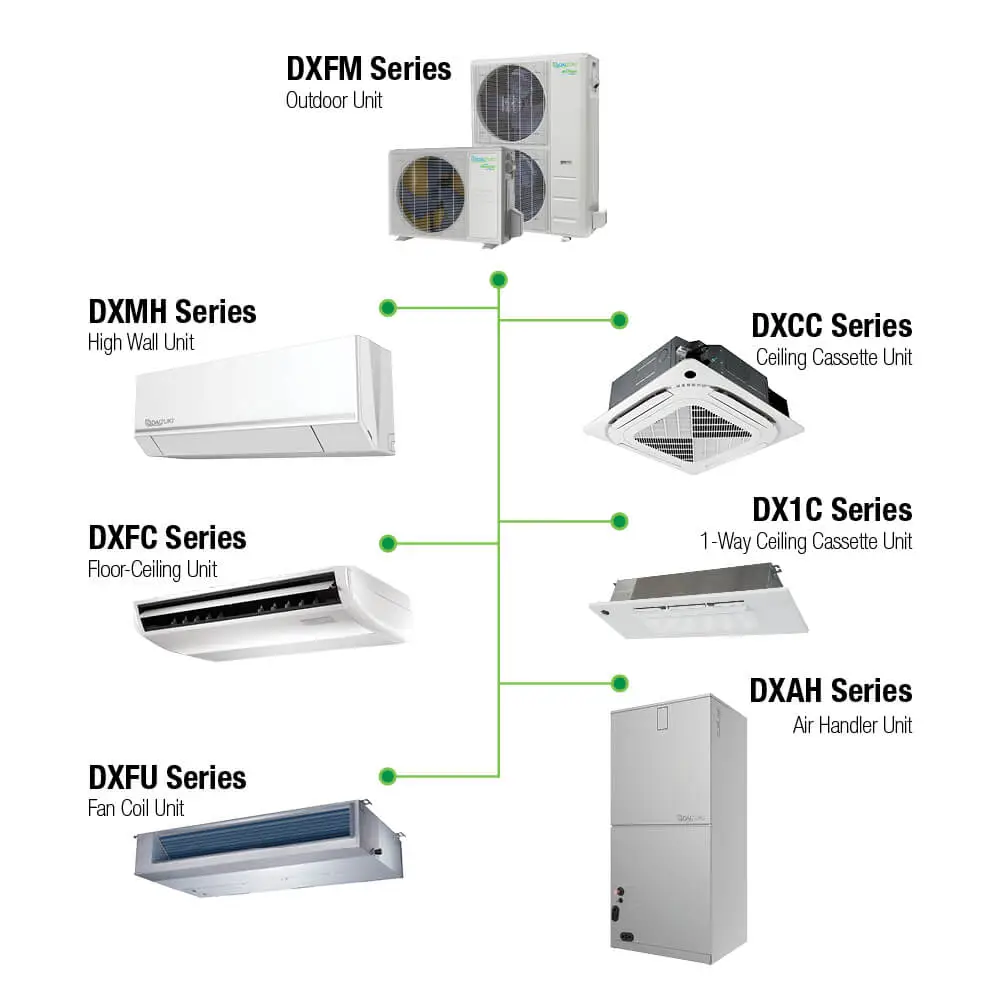
In many high-end villas, you’ll encounter VRV/VRF systems from brands like Daikin, Mitsubishi, LG, or Samsung. Integration here requires a dedicated KNX gateway.
🛠️ Important Note: Each HVAC brand uses its own proprietary protocol (2-wire or 3-wire), so your KNX gateway must be selected accordingly.
Examples include:
- Daikin-KNX Gateway
- LG VRF-KNX Gateway
- Mitsubishi Electric-KNX Interface
These gateways act as bridges: one side connects to the KNX backbone, and the other side talks to the indoor units via the brand’s protocol. Once configured, all indoor units can be controlled via your KNX system, mobile app, or central touchscreen.
💨 3. Airflow and Motorized Dampers
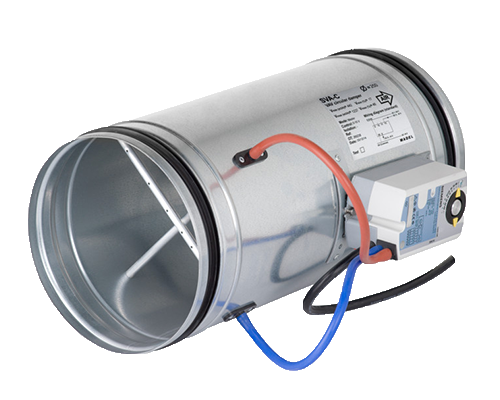
Some villa projects, especially larger ones with ducted airflow control, use motorized dampers (left/right or open/close logic). While not a cooling system in themselves, they direct air to specific zones.
Here, the KNX curtain actuator is a clever solution.
- Left/Right rotation = Open/Close damper
- Control via same logic as shutter or blind
This approach avoids adding extra wiring or control logic—just repurpose a tested KNX module.

🎛️ Thermostat Selection: One Design, All Functions
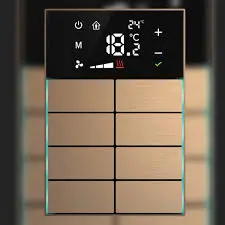

No matter what cooling system you’re using, you can standardize your thermostat across all rooms. In our villa projects, we often deploy Dora series thermostats by MM Electro, which offer:
- Temperature control
- Fan speed adjustment
- Scenario support (e.g., night, away, eco)
- Touch interface with light and curtain control
This standardization simplifies both user experience and maintenance.
💡 Real-World Application in the UAE Market
From Palm Jumeirah villas to Al Barsha compounds, we’ve successfully deployed cooling control solutions over KNX. Our ability to mix brands, use local stock, and optimize for heat loads specific to UAE villas has made us a trusted partner for developers and MEP consultants.
We always begin each project with a cooling type audit, then recommend the most efficient and KNX-compatible approach—whether it’s through direct controllers or brand-specific gateways.
✅ Summary
| Cooling Type | KNX Integration Method | Notes |
|---|---|---|
| FCU (2/4 Pipe) | FCU Controller | Controls fan speeds & valves |
| AC / VRV / VRF | Brand-specific KNX Gateway | Match brand to correct gateway |
| Airflow / Dampers | KNX Curtain Actuator | Controls airflow zone direction |
| Thermostats | MM Electro Dora Series | Unified UX across all rooms |
❌ What This Article Doesn’t Cover
This article excludes heating system integration, as it’s rarely needed in the Gulf region.

Yes. KNX is extremely flexible and compatible with almost any cooling system. However, for legacy split units that only support infrared remotes, an IR gateway might be needed. This method is not recommended, as it lacks reliable status feedback, which limits professional control.
Airflow systems are mainly found in newly built commercial buildings, especially in areas like Jumeirah Lakes Towers (JLT) in Dubai. In some countries, this approach is also known as air handling unit (AHU).
The main difference is in the cooling medium:
FCUs typically use chilled water
AC units rely on refrigerant gas
There are also differences in control logic and integration options, especially with the rise of inverter technologies and smart gateways.
Ideally, one KNX gateway should be used per indoor unit, especially when using brands like Zennio. Although some gateways support multiple units (up to 16), placing each gateway near its indoor unit ensures easier wiring, service, and reliability.
Not significantly. In practice, the price of a KNX gateway for a single indoor unit is often comparable to that of an FCU actuator. The decision is usually based more on the type of cooling system in use than on pricing.