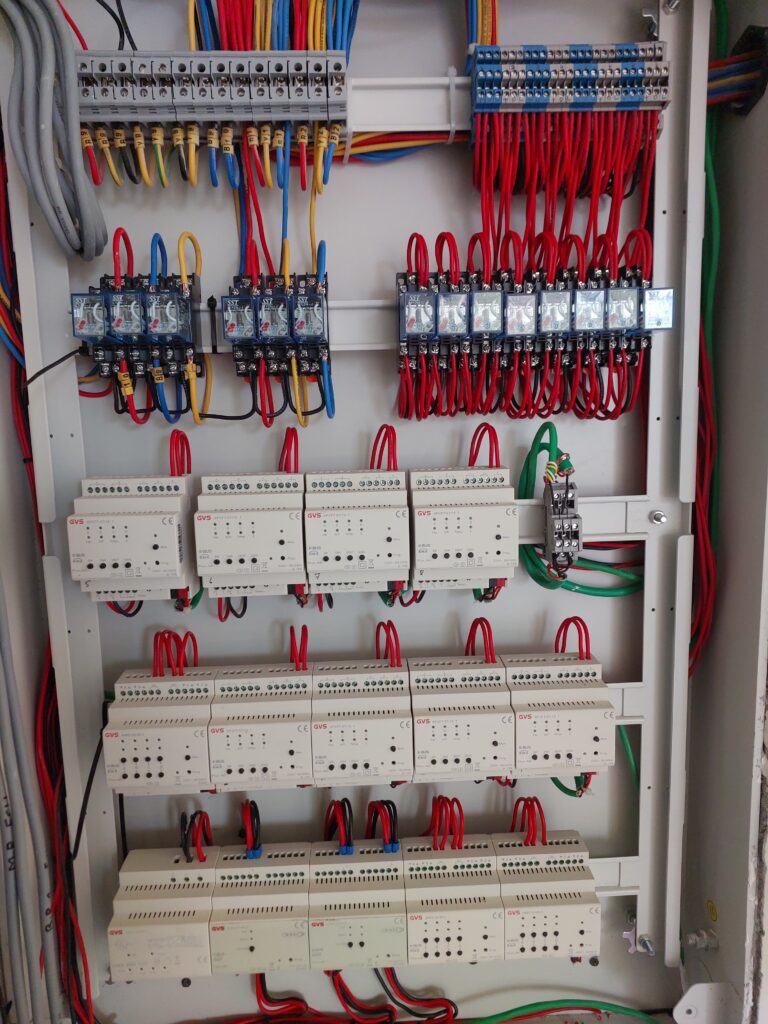
When Should You Use External Relays with KNX Switch Actuators? A Practical Guide for Reliable Installations
Introduction
KNX switch actuators are designed to control a wide range of electrical loads reliably. However, connecting every load directly to an actuator output is not always the best engineering practice.
In real-world projects, especially in luxury villas and commercial buildings in Dubai, certain loads can significantly reduce the lifespan of relay contacts inside a KNX actuator. High inrush current, inductive loads, capacitive loads, and harsh outdoor conditions are common reasons why experienced system integrators choose to install an external relay or contactor.
Using an inexpensive DIN rail relay as the switching element can protect an expensive KNX switch actuator, reduce maintenance costs, and improve the long-term reliability of the installation.
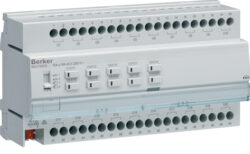
Typical Applications Where We Recommend External Relays
Water Heaters
In many residential projects across Dubai, electric water heaters are integrated into the smart home system for scheduling and energy management.
Although the steady-state current may be within the actuator’s rated capacity, repeated switching of heating elements can shorten the life of the actuator contacts. Installing an external relay allows the KNX actuator to energize only the relay coil while the relay handles the power switching.
Refrigerators
Refrigerators contain compressor motors that generate a high starting current every time the compressor starts.
Instead of exposing the actuator contacts to these repetitive current peaks, we recommend controlling the refrigerator through an external relay whenever smart switching is required.
Dishwashers
Dishwashers combine inductive and resistive loads within a single appliance.
For long-term reliability, we typically install an external relay rather than connecting the appliance directly to the switch actuator.
Outdoor Lighting Circuits
Outdoor lighting deserves special attention.
Landscape lighting, garden lighting, façade lighting, and decorative exterior fixtures are exposed to moisture, rain, cable insulation degradation, and other environmental conditions that can eventually cause electrical faults.
If a fault occurs, replacing a low-cost relay is considerably easier and less expensive than replacing a KNX switch actuator.
For this reason, outdoor lighting circuits are among the first applications where we recommend external relays.
Large LED Chandeliers and Multi-Driver Lighting Systems
Many people assume that LED lighting always represents a light electrical load.
In reality, large chandeliers often contain dozens of LED drivers operating simultaneously.
When switched on, these drivers can generate a substantial inrush current even though the steady-state power consumption is relatively low.
In these situations, using an external relay or a single-phase contactor helps protect the actuator from unnecessary stress while maintaining reliable operation.
Benefits of Using External Relays
Installing an external relay offers several practical advantages:
- Provides greater flexibility for heavy-duty electrical loads
- Protects the internal relay contacts of the KNX switch actuator
- Extends the service life of expensive KNX devices
- Reduces maintenance and replacement costs
- Simplifies troubleshooting
- Makes future repairs faster and less expensive
When an External Relay May Not Be Necessary
Not every circuit requires an additional relay.
Small resistive lighting loads, low-power LED circuits with limited inrush current, and other light-duty applications can often be switched directly by the KNX actuator, provided they remain within the manufacturer’s specifications.
The decision should always be based on the electrical characteristics of the connected load rather than current rating alone.
Final Thoughts
A KNX switch actuator is one of the most valuable components inside a smart home distribution board. Protecting it with an inexpensive external relay is often a simple engineering decision that significantly improves long-term reliability.
In our projects, we consider external relays not as an unnecessary expense, but as a preventive investment that protects both the equipment and the client’s maintenance budget.
Whether you are controlling water heaters, refrigerators, outdoor lighting, pumps, or large LED lighting systems, selecting the appropriate switching method from the beginning can save both time and money throughout the lifetime of the installation.
| Load Type | Direct Connection | External Relay Recommended | Contactor Recommended |
|---|---|---|---|
| Water Heater | ⚠️ | ✅ | Optional |
| Refrigerator | ⚠️ | ✅ | No |
| Washing Machine | ⚠️ | ✅ | No |
| Dishwasher | ⚠️ | ✅ | No |
| Outdoor Lighting | ⚠️ | ✅ | Optional |
| Garden Lighting | ⚠️ | ✅ | Optional |
| Water Pump | ❌ | Optional | ✅ |
| Irrigation Pump | ❌ | Optional | ✅ |
| Large LED Chandeliers | ⚠️ | ✅ | Depending on Load |
| HVAC Equipment (for Valve 3 wires only) | ❌ | Optional | ✅ |
What’s Next?
Most installers focus on choosing the right relay, but very few pay attention to the wiring between the KNX actuator and the relay coil.
Surprisingly, this small detail can have a significant impact on panel organization, troubleshooting, and long-term reliability.
In the next article, we’ll explain exactly which cable size to use, how to wire relay coils correctly, and how professional KNX panels are designed—with real-world examples and detailed wiring diagrams.
sample1